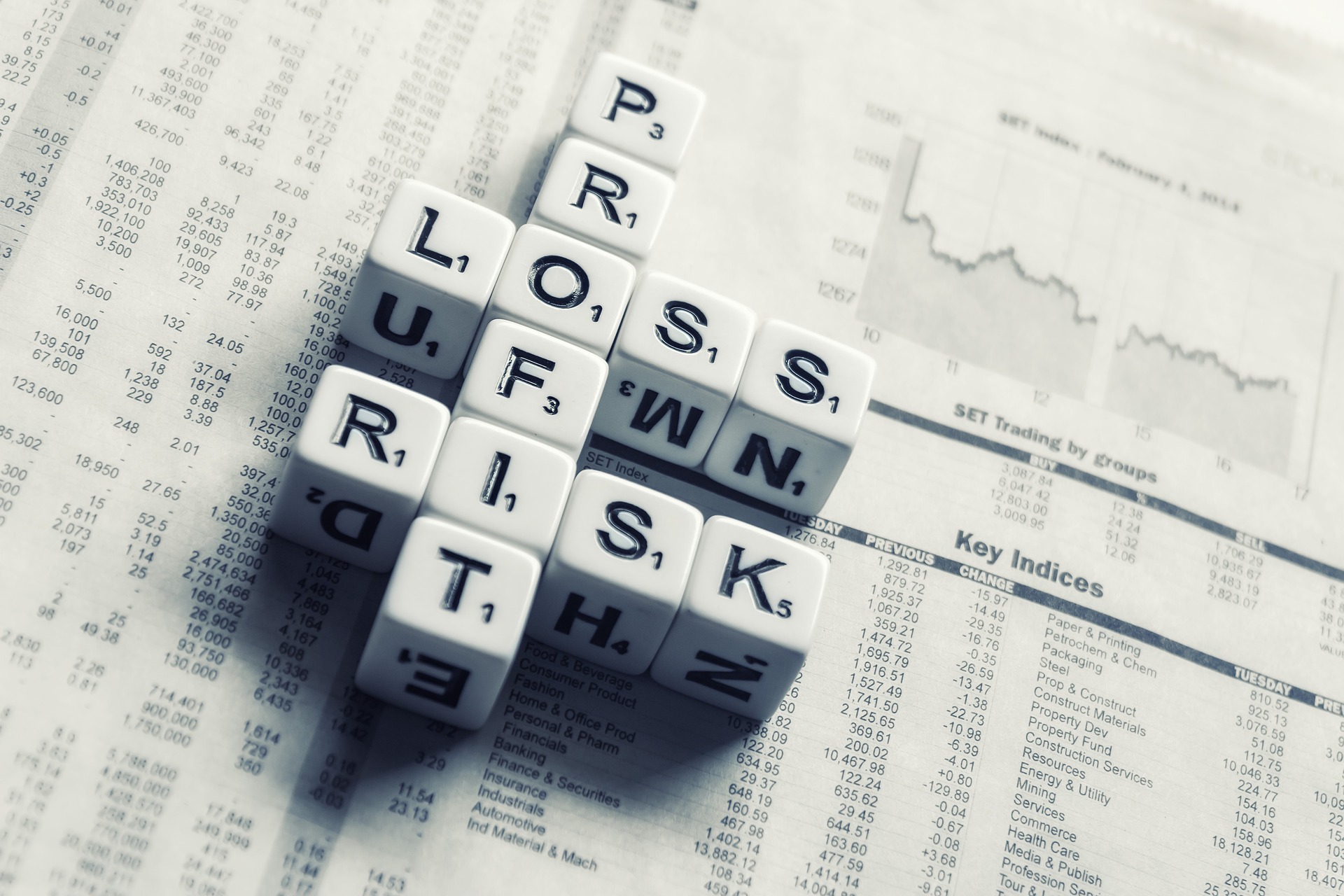
Anatomy of Financial Risk
Introduction
Understanding what constitutes financial risk and what doesn’t, can be extremely empowering. Many people, while being reckless about money, honestly believe they are taking risk which, in their reckoning, is a prerequisite for winning big. On the other end of the spectrum, it is often confused with volatility, some degree of which is inevitable, rather healthy.
Let’s discuss various dimensions of financial risk.
Investment and Speculation
Risk works differently in investment and speculation. While speculating, you are willing to accept a higher probability of loss of capital for a higher return. This is the speculator’s way of taking risk. On the contrary, an investor will have zero tolerance for loss of capital and would be willing to settle for relatively less return. For him, any risk of loss of capital is not worth taking.
What Can be Ruled Out, Must be Ruled Out
Consider this example:
You want to travel from point A to B in your car. What are the hazards or risks involved? Roadworthiness of your car, your proficiency as a driver, whether you slept well last night or not, the speed at which you want to drive vis-a-vis condition of the road, how others are driving on the road, and so on. There are many elements of the total risk involved that are within your grasp to rule out but there are some, you can’t do anything about. Whatever can be ruled out must be ruled out and should not be called risk.
In other words:
The “rule-out-ables” are not part of risk. These factors form part of the risk mitigation process.
The “un-rule-out-ables” are part of risk. The residual risk is the real risk.
Now relate this example with financial matters. While making financial commitments, prior and thorough research is a must. We must rule out what can be ruled out. Hasty and incomplete market research should not be called risk-taking.
In the business world, it’s a very common approach that is followed for risk mitigation. Ideally, a good businessman would like to take no risk. But some risks are unavoidable which he would like to fully understand first and then be willing to take.
I suggest the same approach in personal financial matters.
Remember! in investments, there are no “missed opportunities”. It is the shrewd marketing campaign that forces us to believe something to be a “lifetime opportunity” and we are happily ready to take a risk that is not even risk but recklessness.
Risk vs Volatility
By definition, the risk refers to permanent loss of capital whereas volatility is a measure of periodic ups and downs in the market. Then why are these two distinctly different phenomena mixed up? It is because of the two different approaches people take to the market i.e. investment and speculation. In investment, only the business risk is assessed by analyzing the quality of a business, and attendant volatility is either disregarded or is favorably used as it presents better buying opportunities. On the contrary, in speculation, the entire business model hinges on market volatility, therefore, the risk is also associated with volatility.
This is exactly why you must have heard people saying that the stock market is very risky. This is not the correct formulation. A better way of saying it would be that the stock market is generally volatile. Moreover, there are a number of businesses that are available in the market for investment. Each business is risky in its own way and the risk is closely associated with the quality of that business which can be assessed before making a commitment. Arguably, the stock market is one of the safest places to invest.
Moreover, volatility is a function of secondary markets which are auction-driven. The primary markets have no volatility per se.
The Risk Stems From not Knowing What You are Doing
Driving is very risky if you don’t know how to drive and if you learn it, part of the risk is eliminated. The same argument is applicable to money matters also.
The Actual Risk is Inside Us
Another way of looking at financial risk is that since the final decision lies with the individual, that is where the real risk resides. If you find some financial product to be risky or unworthy, you can always say no to it. Moreover, ascertaining the quality of a financial product on offer is also your personal responsibility. Therefore, it will be fair to say that financial risk stems from our behavior and not from a particular financial product.
There are two elements of the financial risk that is inside us: greed and fear. If we can control these two emotions, more than half the job, with regard to risk, is done.
How to Formulate Your Risk Profile
In personal finance, it is very useful to exactly know your risk profile. It keeps changing with your age, the situation in your family, and your financial obligations. It enables you to decide what kind of financial commitments or investments you should be making.
Some of the questions to ask with regard to your risk profile are:
What is your age? The risk profile of a 55-year-old would be very different from that of a 25-year-old.
What is your general health condition?
How many dependents do you have?
How much are you earning vis-a-vis your recurring expenses and long-term financial obligations?
…… and any other question(s) you may think of, on the same lines.
If you have your risk profile ready with you, it will help you in financial decision-making and the quality of your decisions will improve significantly.
A Suggested Checklist to Avoid Financial Risk
A quick checklist is as under:
- Always invest. Never speculate.
- Identify unregulated sectores of the economy and avoid them.
- Buy those financial products which have an earning ability also, in addition to a price.
- Make delayed but well thought out decisions. In the process, if you miss a so called “lifetime opportunity”, it is a blessing in disguise.
- Align your financial orientation with value creation, though it is a slow process. Hope of a “quick buck” will always have an inherrent risk.
- Be reluctant to buy something which has a vigoruous marketing campaign behind it. It is better to find a product rather than the product finding you.
Conclusion
Knowing about financial risk is fundamental to personal finance. The best safety against the risk is to remain away from something you don’t understand. Try to distinguish investment from speculation and risk from volatility. Always realistically work on your personal risk profile and have your checklist handy while making important financial decisions. Be safe first and then gradually grow your wealth.
How did you find this article? Please comment. Any suggestions are also welcome.
My other articles, you may find useful:
How to Make a Personal Financial Plan – Basic Considerations
Personal Finance – A Suggested Checklist
Why I Started a Blog on Personal Finance
Debt, Equity, and Real Estate: An Overview
How to Compare Equity and Real Estate as Investment Options
How Stock Market Works and How to Work in Stock Market?
Benefits and Challenges of Using a Credit Card
A Suggested Investment Framework
Whether to Rent or Own a House. How to Decide?
How to Raise Our Kids to Financial Awareness?
How to Construct a House for Free? (Pay Cost of Land Only)
Mutual Funds or Direct Equity?
10 Powerful Personal Finance Quotes
How Cognitive and Emotional Biases Affect Investing?
Why Speculation is Not a Good Idea?
What to Look For While Investing in Stocks?
10 Instructive Quotes About Investing in Stock Market
How to Buy Life Insurance Safely?
Some Useful Hacks for Effective Money Management
Why Real Estate is so Attractive in Some Developing Countries?





Very informative.
Thank you.